
The Iziko Planetarium and Digital Dome is the most advanced digital planetarium on the African continent. This world-class, multifunctional facility brings digital technology to Cape Town, creating a space of innovation and discovery where art, science and entertainment meet.
The Iziko Planetarium and Digital Dome not only provides an immersive multi-sensory edutainment platform for artistic production – it is also used for cutting-edge scientific research to optimize South Africa’s eResearch and data visualization capacity.
The Iziko Planetarium and Digital Dome makes virtual voyages of the universe possible, providing an unparalleled experience of animation and 360◦ cinema. Explore the inner workings of the human body, or the intricacies of an atomic structure Visit the most advanced digital planetarium on the African continent.
Iziko Museums of South Africa gratefully values and acknowledge the significant and on-going support of our partners in this innovative project.

Shows
Winter holiday showtimes:
27 June 2026 until 19 July 2026
Winter holiday showtimes: Tuesday to Sunday from 27 June 2026 until 19 July 2026 | ||||
Times | 10:30 | 11:30 | 13:00 | 14:00 |
Show Title: | 
| 
| 
| 
|
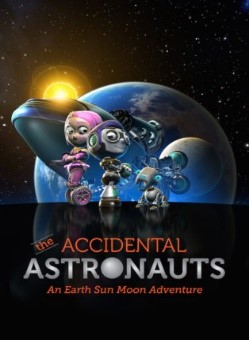
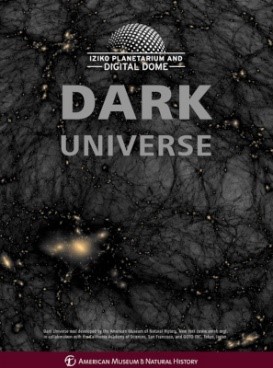
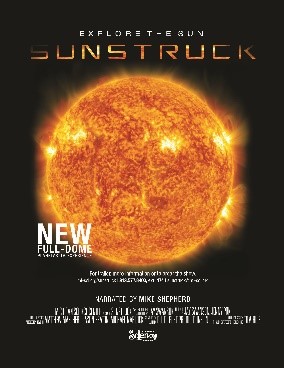
Description | James, a penguin from the South Pole, meets Vladimir, a bear from the North Pole, on Arctic ice. Curious about the long polar nights, they study the stars and build a small observatory. Still puzzled, they create a simple spaceship and travel around Earth, then to Mars and Saturn. They discover that planets are tilted, which causes long days and nights at the poles, and that each planet is similar yet unique. Their adventure ends with knowledge, wonder, and a lasting friendship. | Blast off on an unexpected cosmic journey with Sy, Annie, and their curious dog Armstrong! When a mysterious asteroid crash lands on the Moon. The trio is swept into a whirlwind adventure through space. Accidental Astronauts is a thrilling space tale that inspires wonder and curiosity in young explorers. | The planets, stars, and everything you can see are less than 5 percent of the universe. What is the other 95 percent? Dark Universe examines the invisible dark matter underlying galaxies that, together with dark energy, accounts for that other 95 percent of the universe’s total energy and mass. Narrated by astrophysicist Neil deGrasse Tyson. | Explore the sun in all its glory in this fulldome show. Sunstruck! takes us on a journey to discover the wonders of our magnificent star and investigate how it has supported life on Earth for millennia. This program includes information on the structure of the sun, the source of its energy, and how solar activity impacts our world. Located in the center of our solar system, our Sun is an average star. Learn about its mass, gases, temperatures and energy… and its fate in the far distant future. |
Term 3 Shows:
21 July – 23 September 2026
Winter showtimes: Saturday & Sunday from 21 July 2026 until 23 September 2026 | |||||
Times | 10:30 | 11:30 | 13:00 | 14:00 | 15:00 Only on Tues-Fri |
Show Title: | 
| 
| 
| 
| 
|
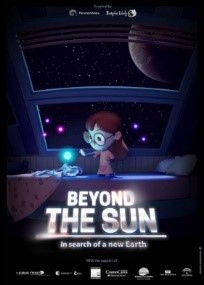
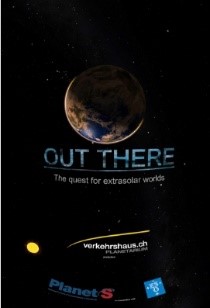
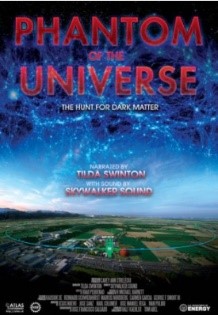
Description | Explore the secrets of our cosmic chemistry, and our explosive origins. Connect life on Earth to the evolution of the Universe by following the formation of Hydrogen atoms to the synthesis of Carbon, and the molecules for life. Narrated by Andy Serkis | Celeste, a curious girl who dreams of exploring the Universe, meets Moon while reading about space. Together, they travel across the cosmos, discovering exoplanets like rogue planets, ocean worlds, and super-Earths. Moon teaches her how scientists find planets beyond our solar system, inspiring her to keep exploring the stars. | Fly beneath the rings of Saturn, float through the heart of the Orion Nebula, and plunge into a black hole during this captivating introduction to cosmology. Passport to the Universe explores humanity’s place in the cosmos, bringing audiences on an unforgettable journey from Earth all the way to the edge of the observable universe. | For millennia, humans believed Earth was the center of the universe, but this show illustrates how curiosity and modern telescopes have revealed that our Sun is just one of hundreds of billions of stars. It highlights the huge diversity of different worlds discovered “out there,” showing that most stars actually have planets. | “Phantom of the Universe” is a planetarium show about dark matter, tracing its story from the Big Bang to modern experiments like the Large Hadron Collider. It highlights key discoveries by scientists such as Fritz Zwicky and Vera Rubin and explores advanced detectors deep underground. The show is widely available, featured in hundreds of planetariums across the world and in many languages. |


