Simon van Noort
(Research and Exhibitions Department, Iziko Museums of South Africa)
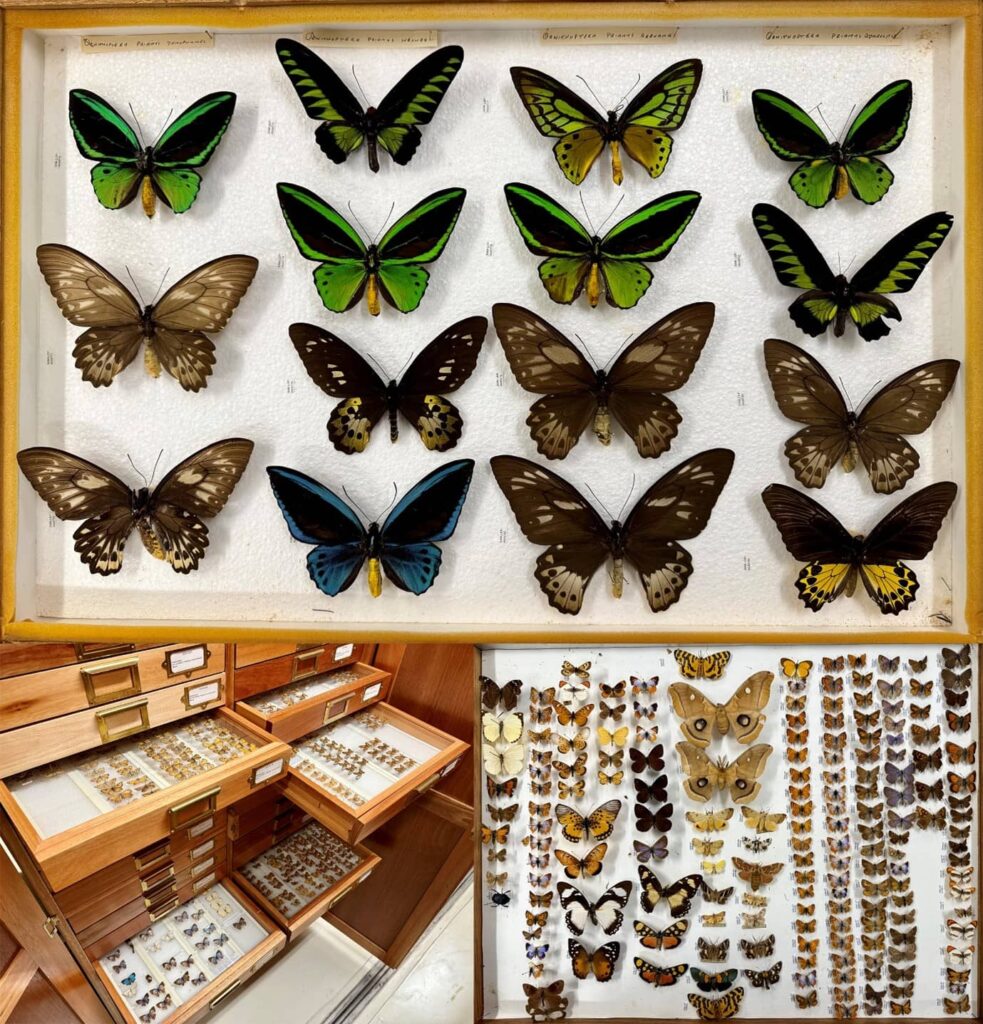
Natural history collections preserve what we know about our incredible biodiversity. They are critical repositories of specimens, underpinning the process of documenting life on Earth, as well as for assessing the rate and impact of global declines in species and their abundance.
The specimens housed in museum collections are fundamentally important for interpreting the global biodiversity crisis that has a rapidly escalating impact on our own well-being. We are losing species to extinction faster than we can discover, collect and describe them, due to human induced habitat transformation and global warming.
Entomology collections contain historical insect specimen data spanning both space and time and hence play an essential reference role in long-term insect monitoring. Collections provide biodiversity data that informs conservation management decisions. They are essential for preserving taxonomic reference specimens, underlying and substantiating the documentation of how many species exist on our planet.The Iziko South African Museum has an internationally significant entomology collection that is the oldest in South Africa with specimens dating back to the 1850s. It is well-curated and contains over 50 million specimens, preserved in various stages of curation. Most of these specimens have emanated from continuous invertebrate inventory surveys conducted over the past 32 years in South Africa and further afield in Africa. A wide range of collecting methods are used in these inventory surveys, including Malaise traps, yellow pan traps, pitfall traps, yellow funnel traps, sweeping, light traps, Winkler bag extraction of leaf litter, etc. Many sites are sampled simultaneously and hence this effort has amounted to the equivalent of running one Malaise trap for 279 years! The Malaise traps have produced an estimated 57 million arthropod specimens increasing the collection size by several orders of magnitude.
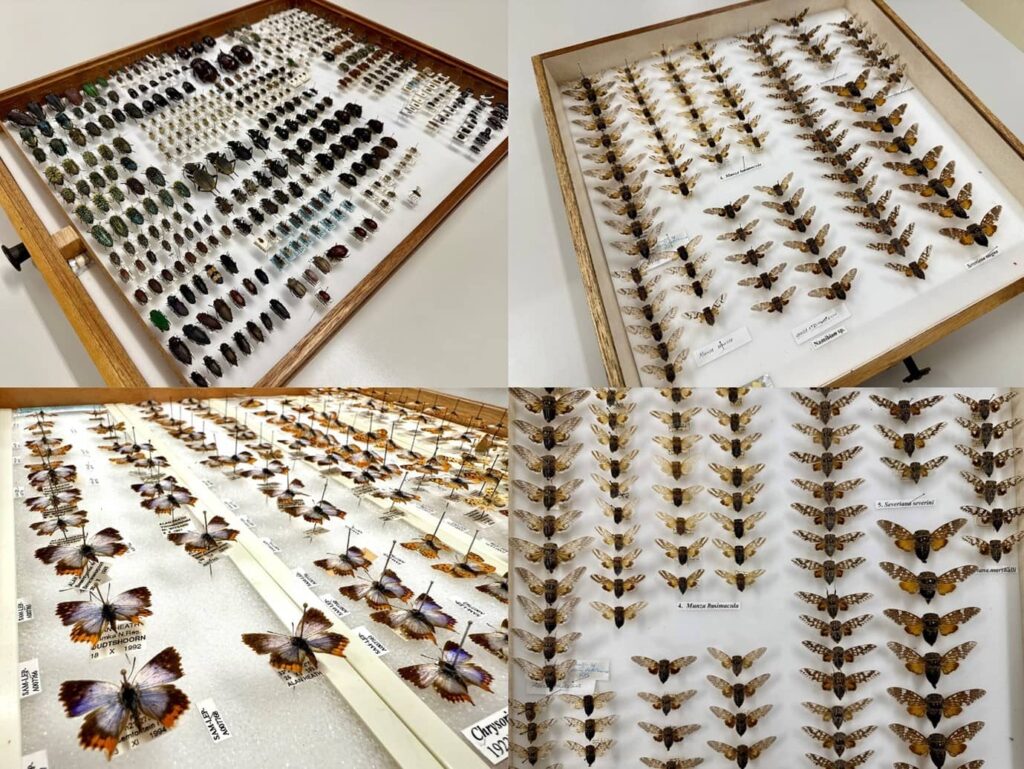
There are an estimated 50 000 described insect species in South Africa, but this represents less than half of the actual species out there, so we still have plenty of work to do. The phenomenal collection resource in the Iziko South African Museum will contribute towards the documentation of insect species richness in Africa and the description of thousands of new species. The species identities, biology, distribution and habitat information associated with the curated specimens will provide baseline data for comparative assessment of the rate of insect decline in the region and will be used for the effective long-term management of ecosystems that we rely on for our own well-being.
The massive biodiversity resources preserved in the Iziko entomology collection were detailed in a recently published scientific paper: van Noort S. 2025. The Iziko South African Museum entomology collection: a goldmine of biodiversity data with mobilisation challenges for more than 50 million specimens. Biological Journal of the Linnean Society 145: blaf062 https://doi.org/10.1093/biolinnean/blaf062

Simon van Noort is Curator of Entomology having conducted research on wasp systematics and evolution at Iziko since 1992.
https://www.iziko.org.za/researcher/simon-van-noort
http://www.figweb.org/Research/Laboratories/van_Noort/index.htm
https://www.researchgate.net/profile/Simon_Noort