(by Dr Dylan Clarke: Curator: Marine Invertebrates: Iziko Museums of South Africa)
In a quiet collection storage area within the Iziko South African Museum, glass jars shimmer in the fluorescent light (Figure 1).
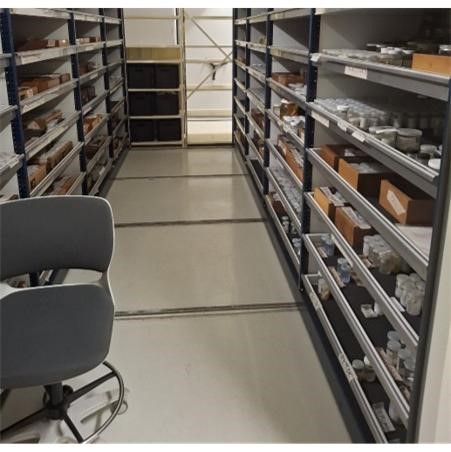
Inside are tiny, coiled creatures, some feathery, some bristled, some almost transparent. They are polychaetes, or marine bristle worms, and although most people never see them alive, these small invertebrates tell stories far larger than themselves. Each specimen, collected from the sandy shores of False Bay to the cold depths off Namibia and the muddy seabeds of Angola, reveal clues about the state of the ocean it came from, both past and present (Figure 2).
Polychaetes make up one of the most diverse and ecologically important groups of marine animals. Found from shallow estuaries to the deep sea, they play a crucial role in maintaining healthy marine ecosystems. They are like engineers of the sea floor, with some species that burrow through sediment, allowing oxygen to reach deeper layers; while others clean up organic material or filter the water. Without them, entire food webs could collapse. Because they respond quickly to changes in their environment, polychaetes are among the best biological indicators of ocean health. When pollution increases, or oxygen levels drop, certain species disappear while others multiply, providing scientists with early warnings of ecosystem stress.

Iziko’s Marine Biology Collection, one of the largest in Africa, houses tens of thousands of marine invertebrates collected over more than a century. Many were gathered during historic expeditions along the entire South African coast, offering a unique record of marine life before large-scale industrialisation and climate change.
By comparing modern specimens to those collected decades ago, scientists can detect shifts in species composition, range, and abundance. These collections can essentially act like time capsules as they allow us to reconstruct how marine biodiversity has changed over time and, more importantly provide us clues as to why. Such comparisons are now being strengthened through molecular research. DNA that are successfully extracted from preserved specimens allows researchers to confirm species identities and even uncover species new to science (Figure 3), revealing just how much remains to be discovered in African’s oceans.
The study of polychaetes is not just for academic purposes, but it has very practical outcomes. This primary biodiversity data that are generated from benthic biological surveys are often used in environmental impact assessments for harbour developments, oil exploration, offshore drilling, and coastal restoration projects. The presence or absence of certain polychaete taxa helps determine whether an area is healthy or polluted.

In projects like SEAMAPS, Iziko scientists collaborate with regional partners to document deep-sea biodiversity and generate DNA barcodes that help identify species faster and more accurately. This work contributes directly to marine spatial planning, that help the South African government balance economic development with the protection of fragile ecosystems. Polychaetes may be small, but are one of the group of organisms that give us the information we need to make big choices about how we use and care for our oceans.
The story of the polychaetes also adds to the story of how museums serve society. In a time of accelerating environmental change, natural history collections preserve not only specimens, but vital knowledge that can be used in the future. Every specimen added to the collection strengthens South Africa’s scientific authority and global visibility in marine research. And every discovery made from these collections reminds us that understanding biodiversity is the first step to protecting it.
The next time you stand at the seashore, watching the tide draw lines in the sand, remember the unseen world beneath your feet; a bustling, wriggling community of worms that quietly keeps the ocean breathing. In their own silent way, they are guardians of the deep and in the jars at Iziko, they continue to whisper their secrets to those who know how to listen and learn.